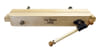
Lie-Nielsen Large Workbench
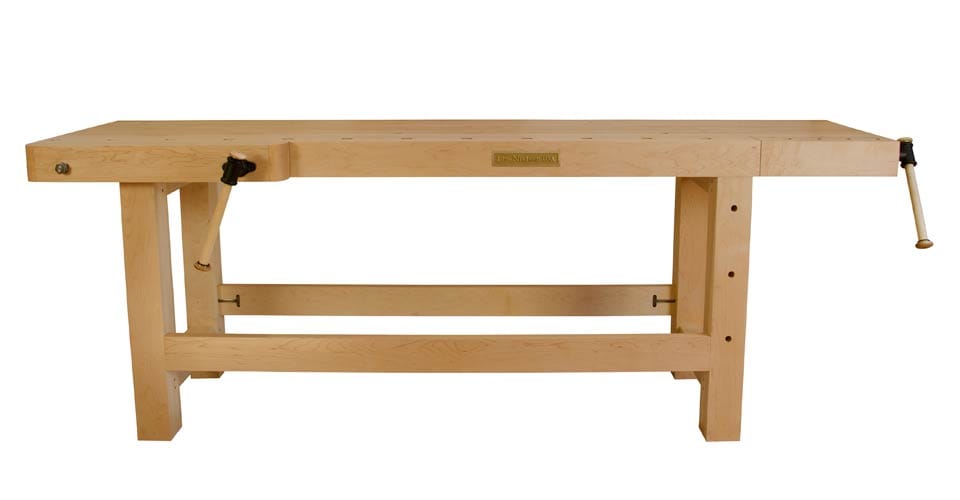
We modified several key features to create the Lie-Nielsen Workbench:
- The shoulder vise is a chain-drive twin-screw vise, with 18-3/16" spacing between the screws, 8-1/8" of travel, and a 29-13/16" Maple jaw.
- The rugged tail vise has 7" of travel and a non-traditional “no L-block” jaw.
- The front stretcher is 4-1/8" wide and flush to the front of the legs and benchtop. Trestle legs are 4" square and flush with the front of the bench.
- No skirt, no tool tray, just plenty of clamping surface.
- 4" thick solid Hard Maple top.
- 8 feet long (including tail vise handle) x 2 feet wide (excluding the shoulder vise).
- Bench height is customizable between 32" and 38".
- Weight is 420 lbs.
Benches are normally shipped via LTL trucking and need to be crated. The crating fee is $400 and standard freight shipping costs will be calculated based on the delivery location. You are also welcome to pick up your workbench at our shop in Maine (Maine State Sales Tax will apply).
Click here to view our YouTube video on The Lie-Nielsen Workbench with Christopher Schwarz.
Workbenches
A workbench is one of the most important tools in the shop and needs to be flat, stable and heavy. Lie-Nielsen Workbenches feature simple design and solid construction.
Our benches come equipped with two rugged vises: our Chain-Drive Shoulder Vise, with 8" of travel,
and our non-traditional, “no L-block” Tail Vise, with 7" of travel.
Bench dog holes are along front edge. Dog holes are 1.150" x .950". Holdfast holes along front right
leg and benchtop for a variety of work-holding options. Holdfast holes are ¾" diameter. Benches are
supplied with two vise handles and two wooden square bench dogs.
Click here to download our Lie-Nielsen Holdfast Hole Layout Diagram.
Height:
Most benches currently on the market are approximately 35" (88.9cm) high. For many modern hand tool woodworkers, a taller bench is more comfortable. We can customize the height of a workbench between 32" (81.28cm) to 38" (96.52cm) high.
Please call us with any questions: (800) 327-2520
Materials:
Lie-Nielsen Workbenches feature simple design and solid construction. No skirt, no tool tray, just plenty
of clamping surface. They are made of Hard Maple, a native hardwood that is stable, heavy and tough.
Maintenance:
Re-Oiling
We recommend that you re-oil your bench 1-2 times a year, depending on the amount of use the bench gets.
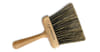
We use a high grade pure linseed oil from Earthpaint, called Special Linseed Oil Wood Finish. It's filtered much more thoroughly than boiled linseed oil, which gives it a lighter finish, much less odor, and very good penetration. Be sure to cover all end grain well (bench top, vise chops) as this will help stabilize the wood. Apply the oil, let it soak in for one hour, and remove any excess.
Remember, linseed oil is highly flammable, and can combust, so always dispose of oil rags and brushes in a safe manner.
Flattening
Over time, your bench may need to be re-flattened. A good way to do this is to use a No. 7 or No. 8 Jointer Plane in order to get the bench top true and flat, working first diagonally back and forth across the grain, then finishing along the grain.
In the February 2008 issue of Popular Woodworking, issue #167, Christopher Schwarz explains this method for flattening your bench with hand tools. You can find this article on their website.